At McLean NTC, we specialize in innovative mental health treatments – options that are clinically proven to provide relief even when conventional treatments don’t work. Our services include transcranial magnetic stimulation (TMS) and intramuscular (IM) ketamine.
In this article, we’ll clearly explain the differences between these two treatments, including their effectiveness, risks and costs, so you can assess whether either could be suited to your unique needs.
What is TMS?
Transcranial Magnetic Stimulation (TMS) is a non-invasive, FDA-approved treatment that uses magnetic fields to stimulate specific brain regions involved in mood regulation. It’s primarily used for treatment-resistant depression (TRD), but has demonstrated effectiveness across several conditions.
How TMS Works
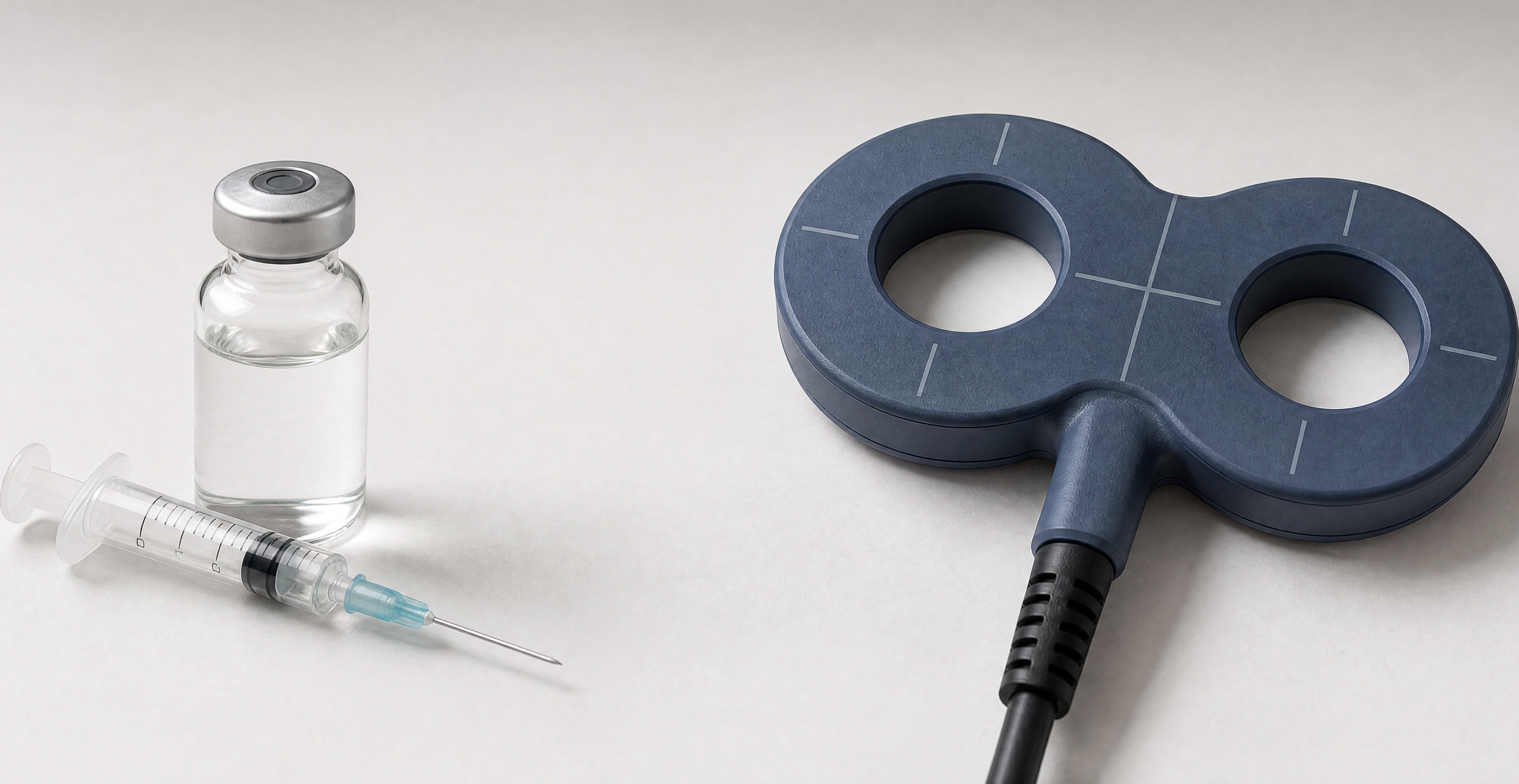
During TMS therapy, an electromagnetic coil is placed against the scalp, over the dorsolateral prefrontal cortex (DLPFC) , a region that tends to be underactive in people with depression. The magnetic pulses stimulate neuronal activity and enhance neuroplasticity, the brain’s ability to form new connections and reorganize itself. This process can help strengthen neural circuits associated with mood and emotional regulation.
At McLean NTC, we use a TMS device from MagVenture, an industry-leading supplier, to ensure precise and consistent treatment delivery.
Conditions Treated with TMS
Beyond depression, TMS has received FDA approval for obsessive-compulsive disorder (OCD), smoking cessation, and migraines. It is also used off-label for conditions such as PTSD, bipolar disorder, and anxiety. Off-label use means the treatment has not yet received FDA approval for a specific condition, but there is meaningful clinical evidence to support its benefits.
What is Ketamine Therapy?
Ketamine was originally developed as an anesthetic but has more recently emerged as a rapid-acting mental health treatment, particularly for patients with TRD. Evidence also supports its use for anxiety disorders, PTSD, OCD, eating disorders, bipolar depression, and addiction.
Unlike TMS, ketamine is not FDA-approved for depression or other psychiatric conditions, and its use in mental health is considered off-label. The exception is Spravato (esketamine), a nasal spray form of ketamine that has received FDA approval specifically for TRD and major depressive disorder with suicidal ideation (MDSI).
At McLean NTC, we offer both ketamine via intramuscular (IM) injection and Spravato, giving patients flexibility in how they access ketamine-based treatment.
How Ketamine Works
Ketamine interacts with NMDA receptors in the brain, triggering a cascade of downstream effects. Like TMS, ketamine promotes neuroplasticity, helping to strengthen neural pathways associated with wellbeing and rewire dysfunctional ones. It also increases activity in the prefrontal cortex, a mechanism similar to TMS, though ketamine’s effects are broader and more immediate.
TMS vs. Ketamine: Comparing Effectiveness
Speed of Relief
TMS: TMS typically requires 30–36 sessions delivered five days a week over four to six weeks. Many patients begin noticing improvements within the first two weeks.
Ketamine: Ketamine can provide rapid symptom relief, often felt within hours to days of a session. An initial course typically involves two sessions per week for approximately one month, making it a shorter overall commitment in terms of calendar time.
Response Rates
TMS: Clinical trials demonstrate response rates of 50–60% in patients with TRD, with remission rates approaching 30%. A large trial published in the Journal of Clinical Psychiatry found that up to one-third of treatment-resistant patients achieved full symptom remission following a course of TMS treatment.
Ketamine: Meta-analytical findings from clinical trials indicate response rates to ketamine of approximately 50%, with remission rates of around 28–30%. A landmark 2023 study published in the New England Journal of Medicine found that 55.4% of patients with TRD responded to ketamine over three weeks, with a remission rate of 32.3%.
Sustained Benefits
TMS: For many patients, TMS provides long-lasting relief from depression. A multisite, naturalistic study found that of the 120 patients who responded or achieved remission at the end of acute treatment, 62.5% continued to meet those criteria at every point throughout a one-year follow-up period. Some patients do require maintenance sessions over time.
Ketamine: The antidepressant effects of ketamine can persist for several weeks following a course of treatment. However, the majority of patients seeking sustained long-term relief will need periodic maintenance sessions. The frequency of these varies from person to person and is something Dr. Haq will discuss with you as part of your individual treatment plan.
TMS vs. Ketamine: Side Effects and Safety
TMS Side Effects
TMS is considered safe and is well-tolerated by the vast majority of patients. Potential side effects include mild scalp discomfort or tingling during treatment, occasional headaches that typically resolve on their own, and temporary hearing changes (ear protection is provided). In rare cases, TMS may trigger seizures or induce mania, though these outcomes are extremely uncommon.
Ketamine Side Effects
Ketamine therapy produces more noticeable side effects than TMS, which is important to understand before starting treatment. These can include dissociation (a feeling of detachment from your surroundings or sense of self), dizziness or nausea during and after a session, and temporary increases in blood pressure and heart rate. These effects are closely monitored by our clinical team throughout each session.
Before starting TMS or ketamine treatment, you’ll undergo an extensive medical evaluation of your personal and medical history. This will help to ensure you won’t be at risk of severe side effects for either treatment.
TMS vs. Ketamine: Cost and Insurance
TMS
Because TMS is FDA-approved for depression, it is widely covered by insurance, including Medicare and Medicaid. However, for conditions other than depression, treatment may need to be paid for out of pocket. While the upfront costs of TMS can be significant, the long-lasting benefits of a treatment course may make it more cost-effective over time.
Ketamine
Because IM ketamine is used off-label for psychiatric conditions, insurance coverage is generally limited, making it a larger out-of-pocket expense than TMS when used for depression. However, for conditions where TMS is not covered by insurance, IM ketamine often involves lower upfront costs.
Before starting treatment, we’ll clearly explain the costs involved with both TMS and ketamine, discuss any insurance options that may be available, guide you through the process, and explore any additional financial support that could help on your journey.
TMS or Ketamine: Who is Each Treatment Suitable For?
Neither TMS nor ketamine is right for everyone. Certain medical or psychiatric conditions may increase the risk of side effects or reduce the suitability of one treatment over the other.
You may not be a suitable candidate for TMS if you have:
- A history of seizures or epilepsy
- Implanted metal devices in or near the head (such as aneurysm clips or cochlear implants)
- Certain neurological conditions affecting brain function
You may not be a suitable candidate for ketamine if you have:
- A current or past history of substance use disorder (due to its potential for misuse)
- Uncontrolled high blood pressure or a significant history of heart disease
- A history of psychosis or schizophrenia
Certain drugs can also interfere with both TMS and ketamine treatment. As such, your current and previous use of medications will be considered in your medical evaluation.
Which Treatment is Right for Me?
If you’re eligible for both TMS and ketamine and are unsure which to pursue, here are the key factors to weigh:
Speed of relief: If you need rapid symptom relief, particularly for severe depression or suicidal thoughts, ketamine’s fast-acting effects make it the more suitable choice. TMS works more gradually, with improvements building over several weeks.
Side effects and tolerability: TMS is generally better tolerated, with milder and more predictable side effects. Ketamine’s psychoactive effects, while manageable in a clinical setting, are more pronounced and won’t be comfortable for everyone.
Time commitment: TMS requires daily sessions over four to six weeks, which is a significant schedule commitment. Ketamine sessions are less frequent, but require post-session monitoring and mean you cannot drive on the day of treatment.
Cost and insurance: TMS is FDA-approved for depression and covered by most insurance plans. IM ketamine is typically self-pay and more expensive for depression, but may be cheaper for other conditions.
Explore TMS and Ketamine at McLean NTC
At McLean NTC, Dr. Haq and our team are dedicated to finding the right treatment pathway for each patient. If you’re curious about innovative mental health treatments, get in touch with our team and we can answer your questions and guide you to finding the best treatment for you.
To learn more or to request a consultation, get in touch with us today.