If you have been exploring ketamine as a treatment option for mental health disorders, you may have noticed that it comes in several different forms, intravenous (IV) and intramuscular (IM) injections, intranasal sprays and oral tablets.
These different delivery methods can have hugely significant differences when it comes to unique drug effects, uses, how quickly the treatment works and the costs involved. In this article, we’ll walk through each of the main ketamine delivery methods so you can have a clear picture about which one may be right for you.
Why the Route of Administration Matters in Ketamine Treatment
Ketamine is one of the most pharmacologically versatile drugs in medicine. Originally developed as an anesthetic in the 1960s, it has since found clinical applications in pain management, procedural sedation, emergency psychiatry, and treatment of mood disorders.
However, ketamine is not a one-size-fits-all drug. Different routes of administration have different rates of absorption into the blood stream and brain impacting the drug’s effects, intensity, risks and duration.
Beyond efficacy, each method carries its own risk and benefit profile. Some routes require IV lines and specialized infusion equipment, whereas others are simpler to administer. Some are covered by insurance whereas others must be paid out of pocket.
At McLean NTC, our care team works closely with clients to help them understand these differences and to determine which approach may be most appropriate for their condition.
Intravenous (IV) Ketamine
IV ketamine is delivered directly into a vein via an infusion drip, typically over 40 minutes. It is the most extensively studied route of administration and the one on which much of the foundational psychiatric research has been conducted. It is used clinically for treatment-resistant depression (TRD), bipolar depression, PTSD, and acute suicidal ideation.
The primary reason IV ketamine has dominated research is because it delivers close to 100% bioavailability, meaning the full dose reaches the bloodstream immediately, without being filtered through the digestive system or metabolized in muscle tissue first. This produces rapid, precise, and predictable responses.
Clinical outcomes using IV ketamine are impressive. The Bio-K study, a multi-site trial involving 74 patients with severe, treatment-resistant depression, found that 52% of participants achieved remission after just three IV infusions over 11 days. Half of those who entered the study with frequent suicidal thoughts experienced a dramatic reduction in those impulses following treatment.
However, IV is not the best choice for everyone. Ketamine has psychoactive effects and induces a state of dissociation, where people feel disconnected from their body and usual sense of reality. While these effects can be pleasant for some, it can be disorientating when they come on as quickly as in IV settings.
Moreover, the procedure can be highly uncomfortable as it requires the patient to have a needle inserted into their vein over a prolonged period. The procedure also raises risk of injection-site complications and because of the complex set-up, tends to be the most expensive form of ketamine delivery.
Intramuscular (IM) Ketamine
IM ketamine is administered via injection directly into a muscle, most commonly the shoulder or thigh, where it is absorbed into the bloodstream rapidly. While IV ketamine has received the most academic attention, IM administration has a strong and growing evidence base and offers several practical advantages that make it a compelling first-line option for many patients.
IM ketamine has historically been used in emergency and anesthetic settings for its rapid action and ease of administration. In the psychiatric context, it is now being used for treatment-resistant depression, PTSD, anxiety, and bipolar depression. Like IV ketamine, it is administered in a clinical setting under medical supervision.
In a retrospective study of 452 adults treated at a US outpatient psychiatric clinic, IM ketamine produced significant and lasting improvements across a clinically complex patient population. Over a median course of four treatments, depression scores improved by 38% and anxiety scores by 50%, with both changes reaching strong statistical significance. Crucially, patients who continued with maintenance treatment sustained these gains for over seven months, and adverse events were rare.
Compared to IV ketamine, IM takes slightly longer to take effect, though onset is still relatively rapid. This more gradual build can actually work in the patient’s favour, as it tends to make any psychoactive effects feel less sudden and disorienting. Bioavailability is marginally lower than IV at around 93%, but remains significantly higher than both oral and intranasal methods. Because IM administration requires less specialist equipment and set-up than an IV infusion, it is generally the more affordable clinical option.
Intranasal (IN) Ketamine
Generic IN Ketamine
Generic intranasal racemic ketamine (the same compound used in IV and IM administration) is used off-label in some clinical settings for depression and other mood disorders. Studies suggest it can be effective, though bioavailability through the nasal route is more variable than IV or IM, typically estimated at around 25–50%. This means a higher dose is needed to achieve comparable brain concentrations, and absorption can be affected by factors like nasal congestion.
Administration generally still takes place in a clinical setting, though some telehealth providers offer IN ketamine for at-home prescription use. IN ketamine is relatively straightforward to administer, and has lower costs per session to administer. It also requires no needles so is more comfortable for patients.
IN Esketamine (Spravato)
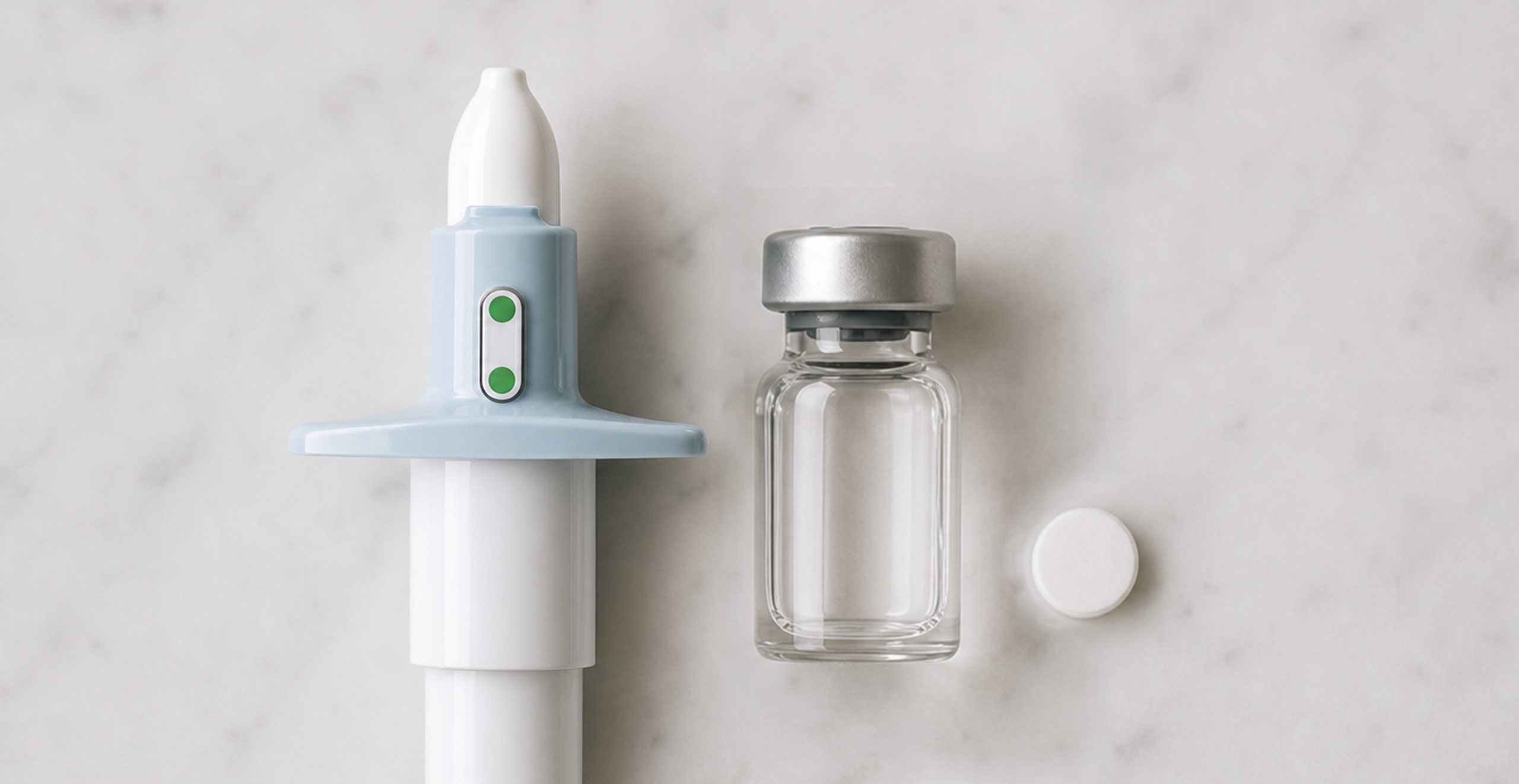
Spravato is the brand name of a nasal spray containing esketamine, one of the two molecules that make up generic ketamine. It is the only ketamine-based treatment currently approved by the FDA for mood disorders. Specifically, it is approved for TRD and major depressive disorder with acute suicidal ideation or behavior.
Spravato can only be administered in a certified healthcare setting, like McLean NTC, where patients self-administer the nasal spray under clinical supervision and are monitored for at least two hours after each session.
In terms of clinical outcomes, a 2025 systematic review and meta-analysis compared IV ketamine to intranasal esketamine across 978 patients found that both treatments produced comparable response and remission rates. IV ketamine did however have a quicker onset of action.
Spravato has significant advantages. Its FDA-approval highlights the treatment has undergone rigorous testing for safety and effectiveness. Moreover, the approval means it’s recognised by most major insurance companies, offering an affordable option for patients. However, only patients who meet the clinical criteria for TRD and MDSI can access this form of treatment.
Oral Ketamine
Oral ketamine comes in the form of tablets, lozenges (troches), and liquid. It is the least invasive form of administration and doesn’t require clinical oversight, so is the most common form of ketamine delivery for at-home use. It is used off-label for depression, chronic pain, PTSD, and as a bridge between IV or IM treatment courses.
The main challenge with oral ketamine is bioavailability. When ketamine is swallowed and passes through the gastrointestinal tract, it undergoes extensive metabolism in the liver, leaving only approximately 17–23% of the original dose available to reach the brain. This means patients often require more doses or higher doses to achieve the same effect as IV and IM, increasing the risk of side effects and build up of harmful metabolites.
A systematic review found that oral ketamine produced slower antidepressant effects compared to IV administration, which aligns with what would be expected given its lower bioavailability and slower absorption profile. That said, oral ketamine has shown promise in real-world clinical programs as a way to extend the benefits of in-clinic treatment, reduce hospital admissions, and support patients who cannot travel frequently to a clinic.
Which Ketamine Administration Method Is Right for You?
There is no single “best” route of ketamine administration, the right choice depends on your clinical history, diagnosis, treatment goals, financial situation, and personal preferences. However, at McLea NTC we believe that IM ketamine and Spravato are the most broadly advantageous, providing significant mood-enhancing benefits, cost-effectiveness, and patient comfort. Our clinical team is specialized to safely and comfortably deliver these treatments and offers personalised support where necessary.
If you’d like to learn more about the different methods of ketamine delivery, or see whether our services at McLean NTC are right for you, then get in touch with a staff member today.